


03 Apr How to Make a Statement with Your Staircase Design
Your staircase serves multiple functions beyond simply making a way to the next level of your home. A staircase design provides a sense of spatial balance, especially in an open concept floor plan. It provides hidden storage, seating, and even serves as a place to display art. And your staircase design serves to make a statement as a primary focal point of your home. A staircase is typically in the sightline of your home’s entryway. It signifies arrival, and states intention insofar as its design.
In the Quad Cities, designing a custom home means you have the opportunity to make your statement and highlight your personal aesthetic in whatever way you desire. A custom home is the culmination of your architectural and interior design dreams. Subtle or bold, your staircase design echoes those dreams your way.
A Staircase Makes a Powerful Statement
The staircase is typically in the sightline of your home’s entryway. It signifies arrival, and states intention insofar as its design. A staircase is as much a statement as it is an architectural element of your home design. Any statement staircase design starts with your architecture and builds from there. Think of the form of your staircase as a three-dimensional sculpture, if you like.
In an open concept home, staircases divide spaces without the use of walls. Staircases dictate movement throughout your home, connecting areas in different ways. And a stylish staircase enhances the overall aesthetic of your home, upping the market value.
How to Decide on Your Staircase Design
Staircase design has evolved over the last few decades beyond just function and, as is the case with modern staircase design, into a specialized design that pushes beyond traditional. Here are some examples of the design elements of both.
Traditional Staircase Design
- Straight Staircase: This is the most common design and is what you see in many homes and businesses alike. This staircase is simple and functional with no curves, breaks, or direction changes. Linear steps take you up and down.
- L-Shaped Quarter Turn: In small spaces, many builders use the L-shaped with a 90° turn. The turn is usually placed at a landing. This staircase design is ideal for corners and tight spaces.
- U-Shaped Staircase: This staircase utilizes a switchback design. Two parallel flights of stairs connect via a landing and switch directions at that point. This is a nice area for a window seat.
- Spiral Staircase: A spiral staircase is both a practical solution in tight spaces and a decorative feature. The stairs ascend in a circular pattern.
- Winder Staircase: This variation of the quarter-turn L-shaped staircase design uses wedge, or pie-shaped treads, to turn a corner rather than a landing.
Modern Staircase Design
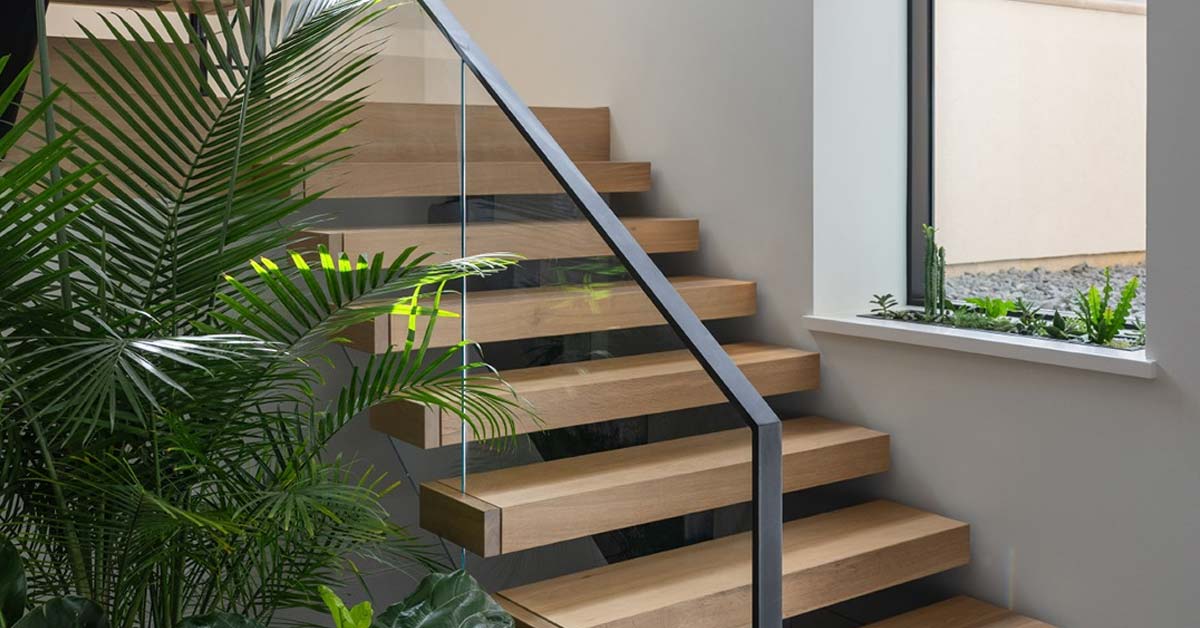
- Floating Design: Also called a cantilever design, this staircase is recognized by the treads appearing to float, but actually has hidden support on one side.
- Curved: This staircase design is a dramatic one. Elegant and sweeping curves (not entirely circular) are a grand feature in many high-end homes.
- Split Staircase: This is another somewhat dramatic design featured in homes. The stairs begin as one, then split into two different directions at a landing.
- Helical Staircase: This staircase is similar to the traditional spiral staircase but with a much wider radius. The helical design lacks a center column and has consistently tapered treads, promoting an architecturally gentle curve.
Whatever your aesthetic, always keep your available space in mind when choosing which staircase design makes the right statement for your custom home. Also, keep your family’s and guests’ safety in mind. Landings reduce the risk of falls and accidents.
After the Architecture
Once you’ve decided on the design of your home’s staircase, you can begin choosing materials, finishes, colors, and millwork. Your staircase, much like a kitchen backsplash or fireplace mantle, is a focal point and echoes the aesthetic of your home. It makes a great place to experiment with art and interior design.
A staircase is typically in the sightline of your home’s entryway. It signifies arrival, and states intention insofar as its design.
There are seemingly endless combinations of elements from which to create your staircase. Wood baluster, handrails, and treads, painted or natural, iron balusters, square newel post, or something with a little flair, or none at all. You can opt for no balusters and install glass panels for a clean and airy modern look, or cable railing for a modern, minimalist aesthetic. A staircase design is as much a personal choice as the rest of your custom home.
Your Custom Home Design Professionals
Your home’s staircase design is much more than a way to your upper floors. For Quad Cities homeowners, it’s an expression of you and your aesthetic. For more on how you can design the custom home of your dreams, including your staircase, please contact your hometown experts, Seiffert Building Supply.